LME aluminium prices drop nearly 4% w-o-w as US-Iran deal eases supply concerns
...
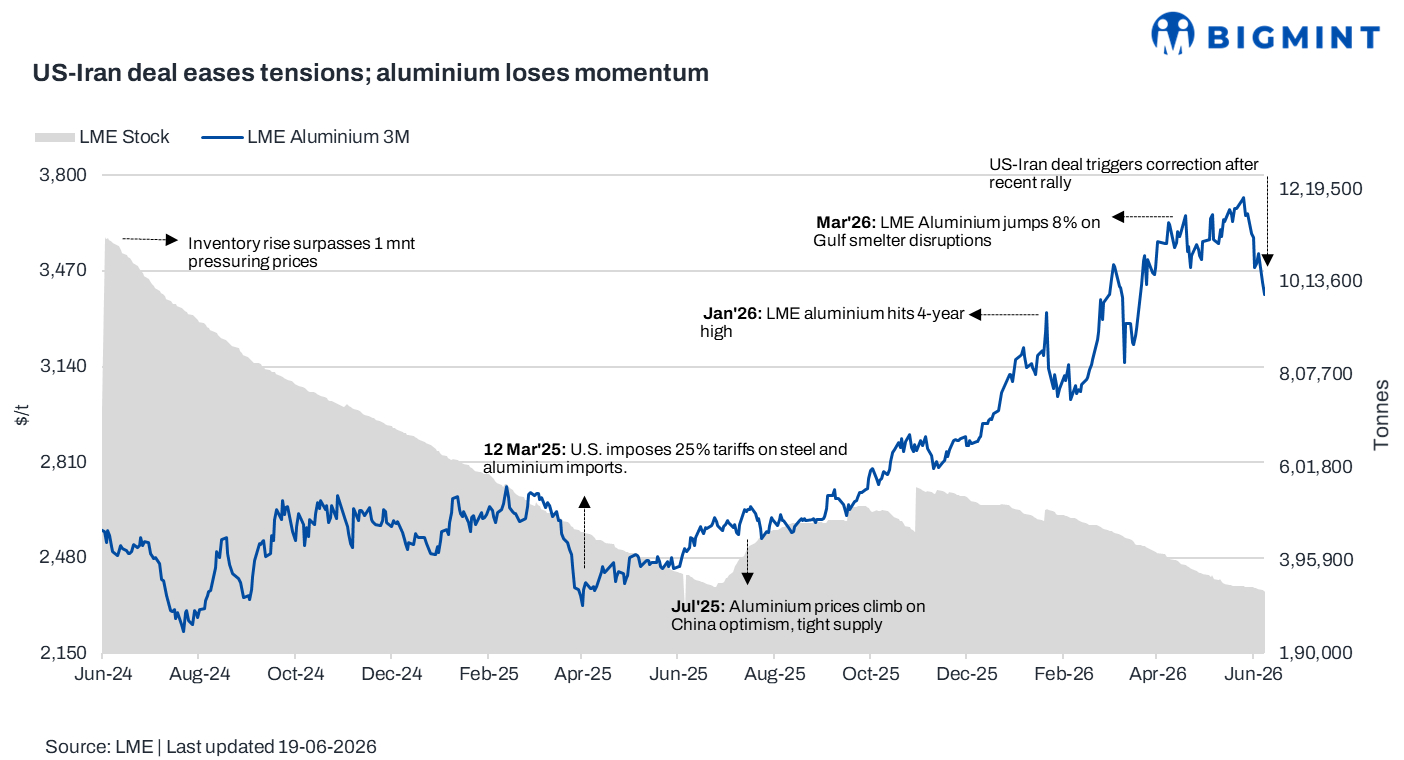

- Aluminium retreats as war premium fades
- Supply constraints continue beneath the surface
LME aluminium prices slipped w-o-w after the recent sharp rally. LME three-month aluminium prices settled at $3,405/t in the week ended 19 June 2026, down by 3.8% from $3,540/t in the previous week.
Aluminium prices opened the week near $3,431/t, fell to a mid-week low of around $3,400/t, and extended losses further to close the week at approximately $3,398/t.
Meanwhile, LME aluminium inventories declined by 2.5% w-o-w to 316,970 t from 325,090 t, indicating continued tightness in visible exchange stocks.
Why did aluminium prices drop?
Aluminium prices corrected as geopolitical tensions in the Middle East began to ease, reducing concerns over prolonged supply disruptions. The trend reversed after ceasefire discussions gained momentum and prospects of a broader US-Iran agreement improved. The reopening of the Strait of Hormuz further alleviated fears surrounding Gulf exports, prompting the market to unwind a significant portion of the geopolitical premium that had built up during the conflict. As supply concerns eased and risk-driven buying subsided, aluminium prices corrected by nearly 10% from their highs.
Outlook
Looking ahead, aluminium prices may face additional downward pressure, with the potential for a further 5-10% correction in the near term as the remaining war premium gradually fades. However, the downside is likely to be limited by the slow pace of supply recovery in the Gulf region. GCC aluminium production remains well below pre-war levels, with major producers such as EGA, Alba, and Qatalum operating at only 30-60% of capacity. Moreover, the global aluminium market is expected to remain in deficit through 2026, as smelter restarts, workforce mobilisation, and logistics normalisation are likely to take several months. As a result, while prices may soften further in the short term, underlying supply tightness is expected to provide support over the medium term.
