Renewed US-Iran escalation raises fresh feedstock and polymer market risks
...

- Shipping disruption could raise freight, insurance, and replacement costs
- Indian resin prices need feedstock or supply-side confirmation for a sustained rise
Fresh military escalation between the United States and Iran has increased uncertainty across global energy and petrochemical markets, bringing the Strait of Hormuz back into focus as a critical risk point for crude oil, refined products and petrochemical supply chains.
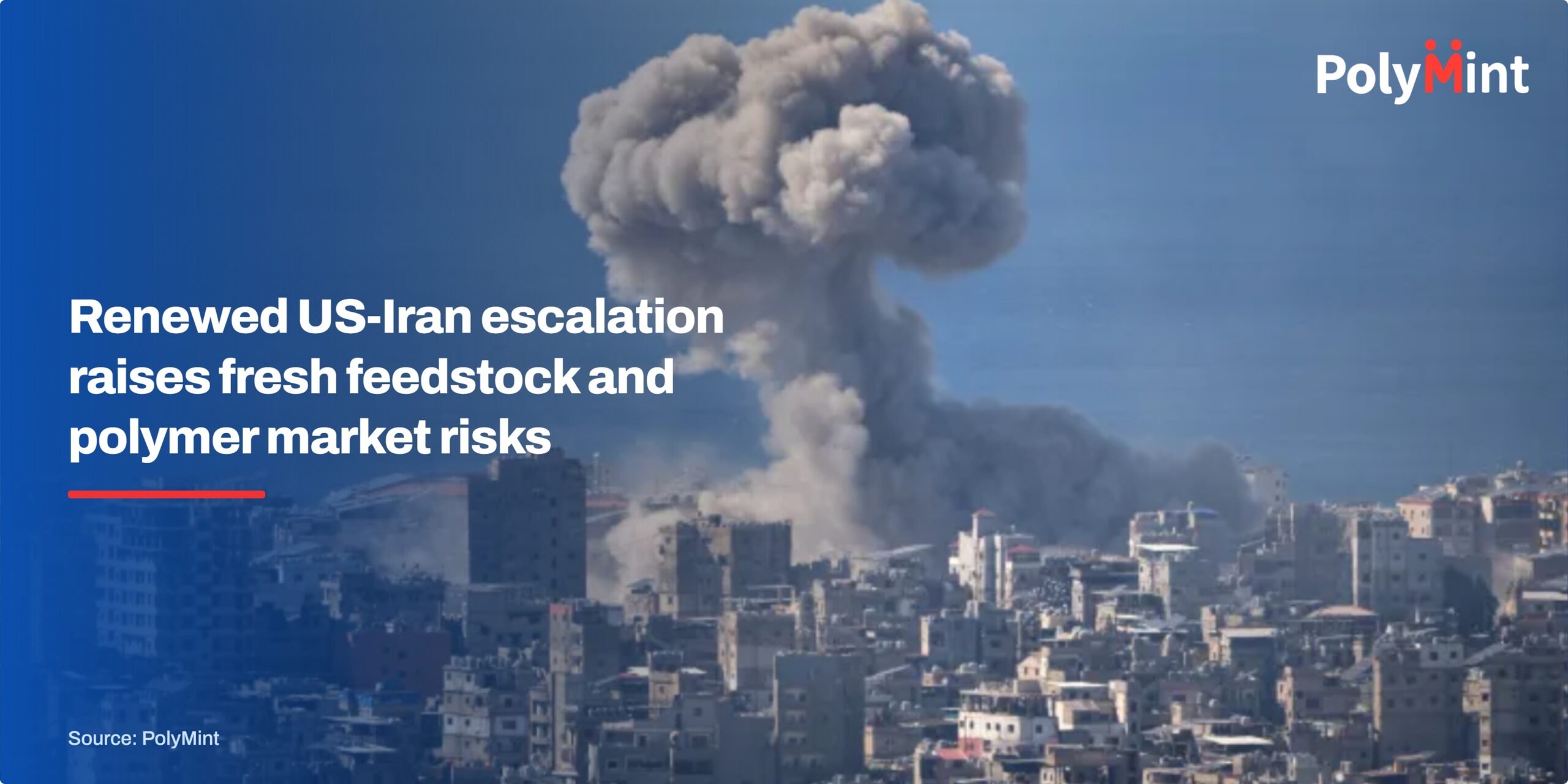
The latest escalation followed reported attacks on three commercial vessels transiting the Strait, after which the US launched strikes on Iranian targets near Sirik, Bandar Abbas and Qeshm. The reported targets included military and maritime infrastructure. Iran subsequently retaliated against US-linked military positions in Bahrain and Kuwait, while missile and drone alerts were reported across parts of the Gulf.
For polymer markets, the immediate risk extends beyond crude oil prices. The more important issue is how a prolonged disruption could move through the petrochemical value chain: higher shipping risks and freight premiums could increase crude and naphtha volatility, raise olefin and aromatic feedstock costs, and, eventually, influence polymer production costs and resin pricing.
The Strait remains one of the world's most important energy transit routes. Oil flows through the waterway averaged around 20.9 million barrels per day during the first half of 2025, equivalent to roughly 20% of global petroleum liquids consumption. Any sustained disruption would therefore have implications extending beyond crude markets into feedstocks, petrochemicals, freight and regional polymer trade.
Polymer price impact depends on duration and transmission
A sustained increase in crude oil prices could raise the cost base of naphtha-linked petrochemical production, particularly in Asia. Higher naphtha costs could transmit into ethylene, propylene, paraxylene, and benzene markets, affecting downstream chains including polyethylene (PE), polypropylene (PP), polyethylene terephthalate (PET), and other resins.
However, the transmission from crude oil to polymer prices is neither immediate nor uniform. The scale of the impact will depend on regional feedstock movements, plant operating rates, producer inventories, import parity, downstream demand and domestic producer pricing strategies.
This distinction is important for India. A short-lived geopolitical shock could increase energy and feedstock volatility without producing a proportional increase in domestic resin prices. A longer disruption affecting vessel movement, regional feedstock supply, or polymer cargo availability would create a stronger transmission channel through higher replacement costs and tighter import parity.
PET chain faces dual feedstock exposure
The PET value chain faces potential volatility through two major feedstock routes: the paraxylene (PX)-PTA chain and the ethylene-MEG chain.
A sustained disruption in Gulf energy and petrochemical trade could influence PX, PTA, and MEG pricing through higher crude and feedstock costs, changes in regional availability, and increased freight expenses. For Indian PET producers and converters, the impact would depend on the duration of the disruption, Asian contract price movements, regional supply availability and domestic producer pricing decisions.
The immediate risk is therefore higher volatility rather than a confirmed one-directional price movement. A sustained increase in PET resin prices would require evidence of higher PX, PTA or MEG costs, tighter regional availability, or producer price revisions.
PE, PP exposed to import-parity and logistics risks
PE and PP markets face a different transmission mechanism because of the Middle East's importance in Asian polymer trade flows.
Prolonged shipping disruption, higher war-risk insurance premiums, or reduced vessel availability could raise CFR import costs for Indian buyers even before a major change in regional resin availability. If crude and naphtha prices rise simultaneously with freight and insurance costs, import parity could strengthen and increase replacement costs for domestic buyers.
However, domestic market direction will also depend on producer inventories and downstream demand. If converters resist higher prices because of weak finished-product demand, producers and traders may find it difficult to pass through the entire increase in feedstock and logistics costs.
The key variables for PE and PP markets over the coming weeks will be crude and regional naphtha prices, Asian ethylene and propylene values, Middle East polymer export availability, freight and insurance costs, currency movements, domestic producer revisions, and downstream buying response.
Recycled polymers could gain relative cost advantage
The recycled polymer market is likely to experience a more indirect impact.
If virgin polymer prices increase materially while recycled polymer prices remain comparatively stable, the price differential between virgin and recycled grades could widen. This could improve the economic attractiveness of recycled material in applications where technical specifications allow substitution.
However, any demand shift will depend on end-use consumption, quality requirements, regulatory-linked procurement, and the availability and cost of post-consumer and post-industrial feedstock. Higher virgin resin prices alone would not guarantee stronger recycled polymer demand if downstream consumption remains weak.
Market implications
The escalation has increased the geopolitical risk premium across the energy and petrochemical complex, but the polymer market impact will depend on whether the disruption remains temporary or extends into physical trade flows.
Through July 2026, market participants will need to assess whether commercial shipping through the Strait continues without material disruption and whether higher risk premiums translate into sustained increases in crude, naphtha, PX, PTA, MEG, ethylene, and propylene prices.
For the Indian market, a sustained upward movement in polymer prices would require confirmation through one or more transmission channels: persistently higher feedstock costs, reduced Middle East export availability, higher freight and insurance costs, stronger import parity, or direct domestic producer price revisions. Until these signals emerge, the escalation is more clearly bullish for petrochemical market volatility and risk premiums than for a confirmed, broad-based rise in Indian polymer prices.
