Pakistan lowers wheat production estimate for MY 2026-27 as adverse weather affects crop yields
...

- Flour prices surge on lower stocks, flood-related disruptions
- Ban on wheat imports continues; export curbs also stay in place
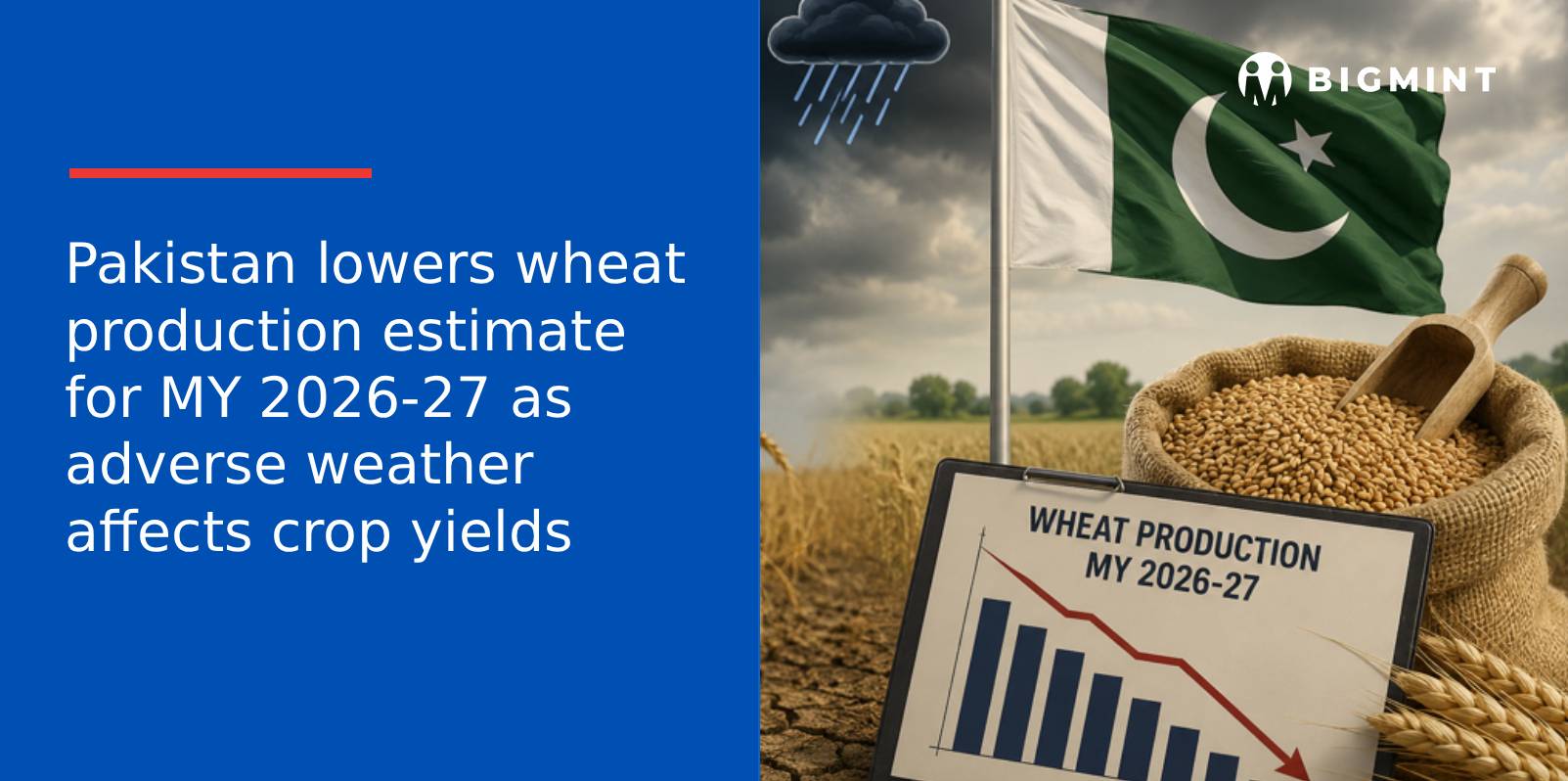
Pakistan's wheat production outlook for MY 2026-27 has been revised downward as adverse weather conditions affected crop yields across key producing regions. According to the latest United States Department of Agriculture (USDA) assessment, wheat production is now estimated at 29 million tonnes (mnt), below the official estimate of 29.68 mnt, reflecting losses caused by late-season heat stress and storms. Climate-related weather variability continues to emerge as a key challenge for Pakistan's wheat sector.
Domestic wheat prices remain elevated
Domestic wheat flour prices increased by around 38% between July 2025 and January 2026, supported by lower available stocks, flood-related supply disruptions, and changes in government procurement policies.
Market participants also attributed higher prices to speculative buying and uncertainty surrounding procurement operations, resulting in tighter domestic market conditions.
Import and export restrictions remain in place
Despite tighter domestic supplies and elevated prices, Pakistan continues to maintain a ban on wheat imports. Although authorities are monitoring the domestic supply situation, imports are currently projected to remain negligible.
Wheat exports also remain prohibited, while continued security concerns and the closure of the Pakistan-Afghanistan border have effectively halted cross-border wheat flour exports to Afghanistan.
Market-based procurement faces implementation hurdles
Pakistan introduced a new wheat procurement policy aimed at reducing direct government intervention and increasing private sector participation. Under the revised system, procurement responsibility was expected to shift toward private companies through a public-private partnership model, supported by subsidised financing and government storage facilities.
However, implementation has been slower than expected. Financing disagreements between banks and private buyers limited participation, with only a small number of approved companies becoming operational. As a result, procurement targets were missed, private purchases remained below expectations, and uncertainty over market stocks contributed to increased price volatility.
Outlook
Pakistan's wheat market is expected to remain firm during MY 2026-27 as lower production, policy uncertainty and restricted trade continue to influence domestic supplies. While the government aims to transition towards a market-based procurement system, improving coordination between public institutions and the private sector will be critical to ensuring stable procurement, reducing price volatility, and strengthening long-term food security.
