Oil shocks highlight coal's strategic role in China
...
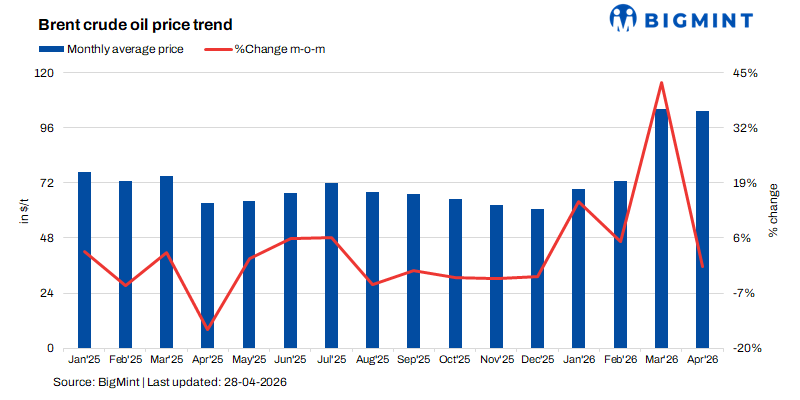

- Coal remains affordable alternative fuel as Brent crude tops $100/bbl
- Chinese power plants turn to coal, strong EV penetration limits oil use
China has limited oil and natural gas reserves but abundant coal resources. This imbalance was long viewed as a structural disadvantage. However, periods of oil market disruptions have rewritten that narrative.
In early 2026, as Middle East fighting pushed Brent crude above $100/barrel (bbl), the oil-to-coal price ratio reached 9.5, nearly double the ten-year average of 4.7. Oil was $20.5/million British thermal units (MMBtu), while domestic Chinese coal was RMB 23/MMBtu.
Three substitution strategies are visible. First, coal for power. When oil and gas prices rise, Chinese power plants simply burn more coal. In the first quarter of 2026, coal-fired power generation rose 4.2% y-o-y.
Second, coal for oil in transportation through electric vehicles. China has the world's largest electric vehicle fleet. In 2025, electric vehicles reached 51% of new car sales, saving an estimated 46 million tonnes (mnt) of oil, according to the China Association of Automobile Manufacturers. Every electric vehicle replaces oil with electricity, and that electricity increasingly comes from coal.
Third, coal for oil in chemicals. China is using coal to make methanol, ethylene, and propylene that it used to make from oil. Methanol from coal rose from 40% in 2020 to 55% in 2025. Ethylene from coal doubled from 5% to 15%.
China is investing in new coal-chemical capacity. Three coal-to-liquids projects consuming 25 mnt of coal annually are under construction. Six coal-to-gas projects consuming 35 mnt are scheduled for completion by 2029. Eight coal-to-olefins and twelve coal-to-ethylene glycol projects are also underway.
Consequently, market tone is bullish for domestic thermal coal demand in China, driven by deliberate policy choices to reduce imported oil and gas dependence.
Note: Price data from Bloomberg, National Bureau of Statistics (NBS), and China Coal Transportation and Distribution Association (CCTD). Chemical production data from the China Petroleum and Chemical Industry Federation. Project data from the National Development and Reform Commission (NDRC) and provincial government announcements.