India's record power peak tests evening grid - Coal, hydro, and rail corridors carry the load
...
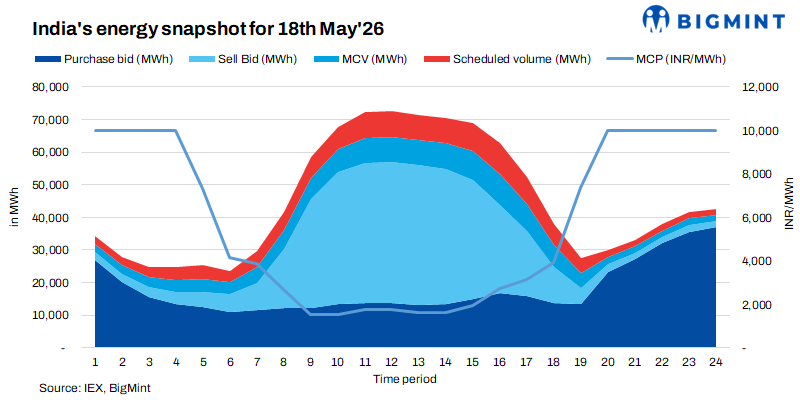

- Evening peak on grid hit 238.4 GW; all-India demand tops 257.4 GW
- Market ceiling hit for 8 hours; outages signal coal fleet stress
India's power system has entered a tighter, hotter summer than planners expected. On 18 May, total all India peak demand reached about 257.37 GW, while demand incident on the transmission grid peaked later at 238.4 GW around 22:30. Both figures were fully met, but the composition and market signals point to a stressed evening system.
What the grid showed
- Afternoon relief from behind the meter solar kept transmission demand near 231-232 GW between 15:30 and 16:00. After sunset, distributed solar vanished and the evening peak shifted onto the grid.
- The 22:00-22:45 stack was coal heavy (about 180+ GW), with solar at zero, hydro providing key flexibility, gas marginal, and pumped hydro plus batteries adding a modest 2.5-2.6 GW buffer. Frequency sat below 50 Hz for a meaningful slice of the day, underscoring tight margins even without breaching emergency limits.
- Inter regional arteries ran hard: Talcher-Kolar HVDC and the 765 kV Angul-Srikakulam corridor carried large exports into the south; the west moved power into the north. These transfers left limited contingency headroom.
Market stress unambiguous
- The day ahead market cleared at the INR 10,000/MWh ceiling for eight hours (00:00-04:00, 20:00-24:00). The day's weighted average price was around INR 5,710/MWh.
- At 20:00, purchase bids were roughly 10x available sell bids; the market cleared only what sellers offered, at the cap.
Outages point to high PLF wear
- Station logs on 18 May show a rash of economiser/superheater tube leakages and fan/condenser issues across multiple states (e.g., Anpara, Koradi, Kalisindh), classic symptoms of hard running coal units in peak summer. Each forced outage tightens evening headroom further.
Why this matters next
- The government's 270 GW summer peak projection looks credible-and may be conservative if the heat persists. New highs are likely to arrive in non solar hours, amplifying reliance on coal, hydro, and short duration storage.
- Each additional 15-20 GW of thermal generation implies about 120,000-200,000 t of extra coal burn per day (3.6-6.0 mnt per month), testing mine output, rakes, and port/stockyard logistics. Coastal plants in Gujarat, Maharashtra, Tamil Nadu, and Andhra Pradesh are the natural marginal buyers of imported mid-CV coal if domestic logistics lag.
- Evening price volatility will recur on hot, low wind days until more flexible capacity (pumped hydro, batteries, responsive gas) scales and is dispatched optimally. Transmission margins into the north and south remain thin during peaks.
Actionable takeaways
- Utilities: Top up coal inventories; pre book coastal cargoes; schedule hydro and storage for 19:00-23:00 ramps; hedge evening exposure via term/real time products; activate demand response for large loads on red flag days.
- Generators: Balance maintenance deferrals against forced outage risk; calibrate dispatch to capture evening spreads; monitor wind ramps closely.
- Policymakers/system operators: Prioritise rake and port allocations for power coal; enforce schedule discipline to limit over drawals; fast track short duration storage and optimise pumped hydro to shave peaks.
What to watch
- Daily peaks versus evening transmission peaks over the next fortnight.
- IEX prints at 19:00-24:00, especially frequency of cap touches and daily weighted MCP above INR 6,000/MWh.
- Thermal outage rates (tube leaks, APH/ID fan faults) during heat spells. Imported coal spot tenders from coastal utilities if inventories tighten.