India: Delayed monsoon and El Nio raise uncertainty over kharif sowing
...

- Rainfall 32% below normal in first 15 days of the southwest monsoon
- Sowing activity for kharif season slows across several key regions
- Lower fertiliser demand estimates, rising nutrient prices point to growing caution around pace of planting
Morning brief:Rainfall during the opening fortnight of India's southwest monsoon season, which coincides with the start of kharif sowing, was around 32% below normal, while persistent western disturbances slowed the monsoon's advance across parts of central and northern India despite active conditions over southern states, according to the Indian Meteorological Department (IMD). Although the IMD has revised its 2026 southwest monsoon forecast to 90% of the Long Period Average (LPA) from an earlier estimate of 92%, agricultural markets are increasingly focused less on the headline seasonal forecast than on rainfall distribution during this critical planting period.
Together with strengthening El Nio conditions, the weaker start to the monsoon season is increasing uncertainty around kharif sowing decisions and acreage allocation rather than signalling an outright production shortfall. The IMD currently assigns a 60% probability to deficient rainfall during the June-September period, but historical experience suggests that the timing and distribution of precipitation often matter more than the seasonal average itself. A revival in monsoon activity over the next few weeks could allow farmers to recover much of the delayed sowing, while a prolonged rainfall deficit may encourage shifts in cropping patterns across India's rain-fed agricultural regions.
Rainfall distribution matters more than seasonal averages
For agricultural markets, the timing and distribution of rainfall often matter more than the seasonal average itself. Historical experience shows that below-normal monsoon rainfall can still support satisfactory crop outcomes if precipitation arrives during key sowing and early vegetative stages. Conversely, prolonged dry spells during June and July can reduce acreage even in years when cumulative seasonal rainfall ultimately proves adequate. 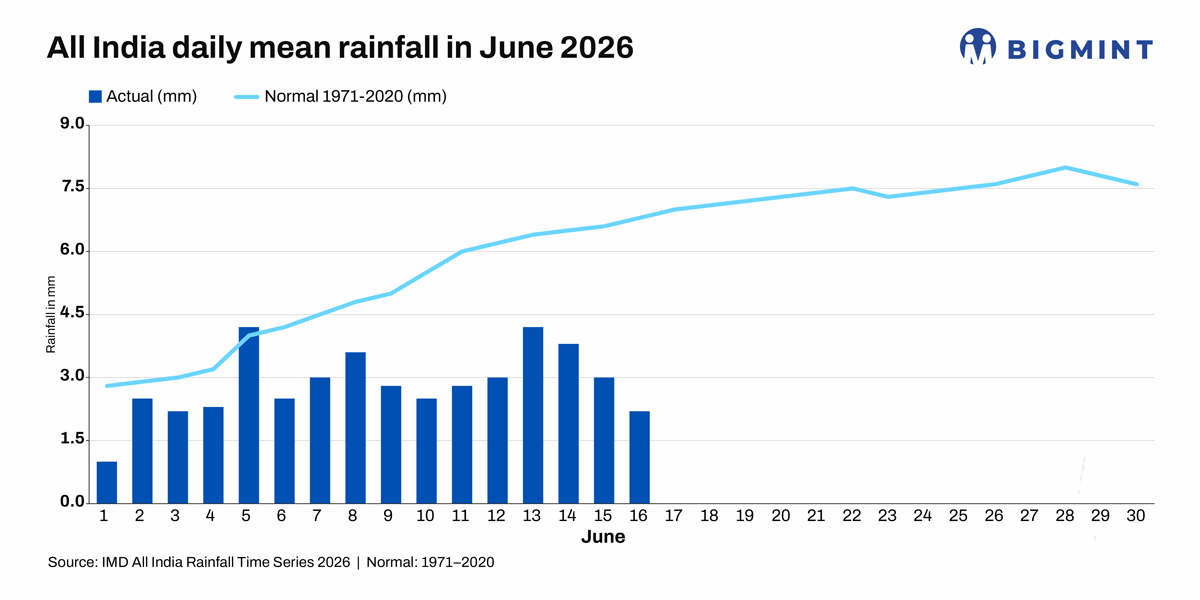
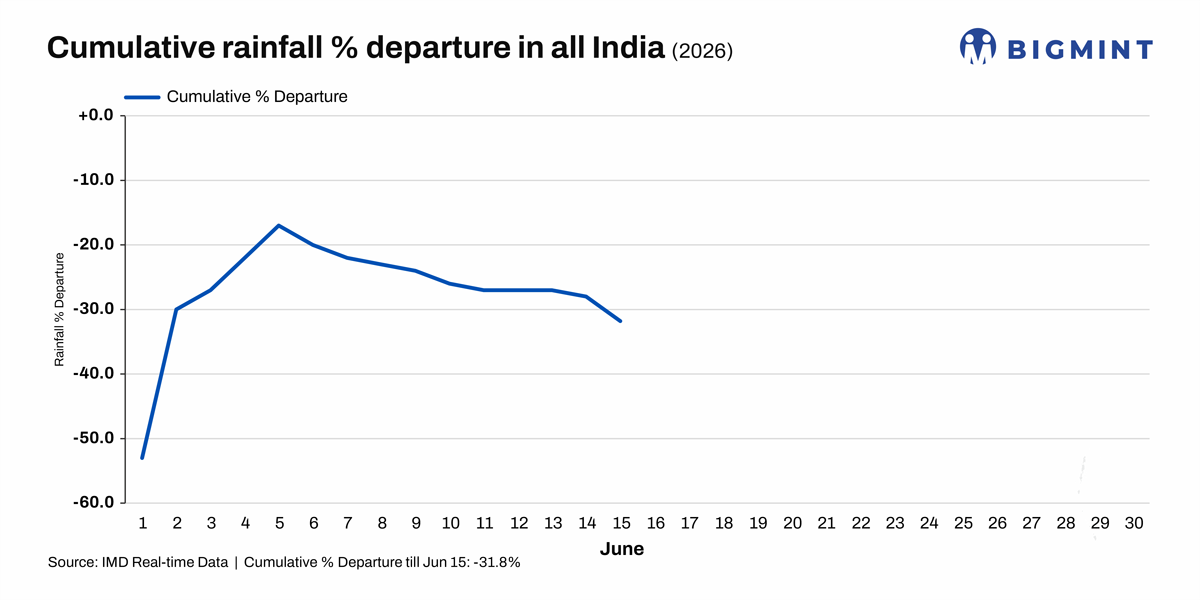
The current weather pattern highlights that distinction. While the monsoon has progressed across Kerala, Tamil Nadu, Andhra Pradesh, Karnataka and parts of Maharashtra, its advance has slowed across several central and northern regions that account for a large share of India's rain-fed crop area.
The next three to four weeks are therefore likely to prove decisive. A revival in monsoon activity before early July would allow farmers to recover much of the delayed sowing, while an extended rainfall deficit could force adjustments in cropping patterns and leave some land unsown.
El Nio increases the risk of acreage shifts
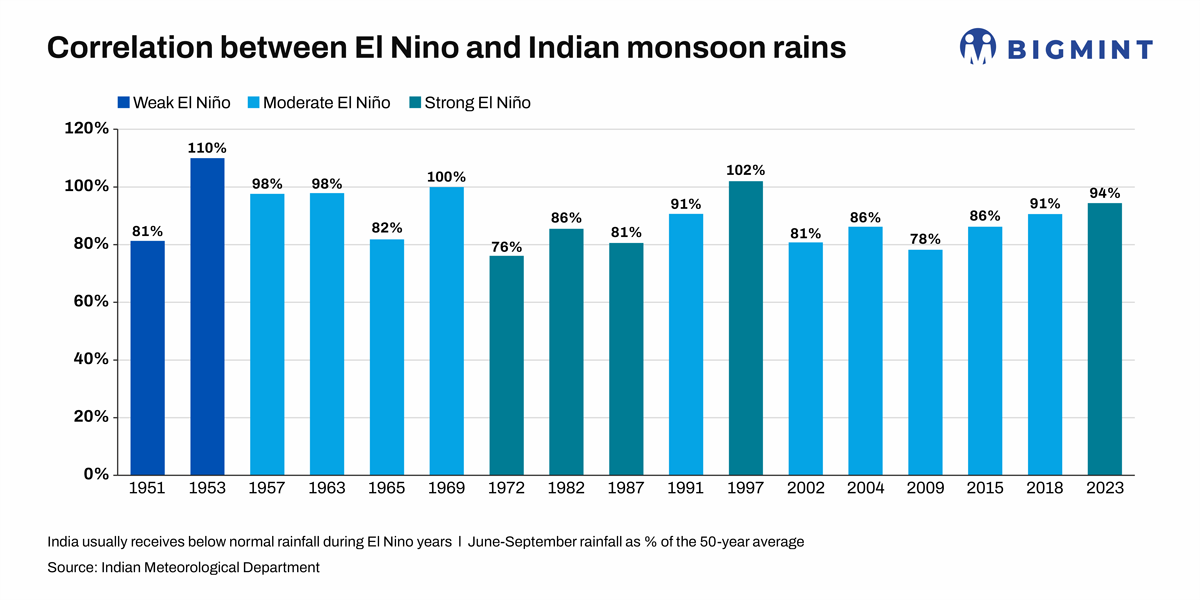
The emergence of El Nio has added another layer of uncertainty to the sowing outlook. Historically, El Nio events have been associated with weaker southwest monsoons, higher temperatures and prolonged dry spells across central and western India.
The principal market concern is not that El Nio automatically results in lower agricultural production, but that delayed rainfall can alter farmer behaviour during the critical sowing window. Slower field preparation and reduced soil moisture may encourage farmers to shift acreage towards crops with shorter growing cycles or lower moisture requirements if weather conditions do not improve.
Government agencies have reportedly prepared contingency plans across nearly 200 vulnerable districts, including alternative seed distribution, water conservation measures and revised crop planning strategies. These measures underline the importance of preserving acreage should monsoon progress remain uneven over the coming weeks.
Kharif crops account for nearly 55% of India's annual foodgrain production, while approximately 52% of the country's net sown area remains dependent on rainfall despite continued expansion of irrigation infrastructure. As a result, changes in sowing behaviour can have a disproportionate influence on agricultural output even when seasonal rainfall eventually recovers.
Fertiliser demand offers an early market signal
One of the earliest indicators of changing farmer behaviour is fertiliser demand. The government's decision to reduce kharif fertiliser demand estimates ahead of the sowing season suggests expectations of slower planting activity rather than concerns over product availability. Urea and DAP inventories remain adequate, indicating that supply constraints are unlikely to become a limiting factor.
Instead, delayed rainfall may simply postpone fertiliser application until soil moisture conditions improve. Historically, fertiliser consumption has tracked sowing progress closely, making demand estimates one of the earliest market-based indicators of changing acreage decisions.
The softer demand outlook also comes against a backdrop of strengthening global fertiliser markets. According to the World Bank's commodity price data released in June, benchmark phosphate fertiliser prices have climbed sharply in recent months, with DAP prices rising from an average of around US$635/t during January-March to nearly US$770/t in May, while TSP prices increased to above US$710/t. Urea prices also remain elevated despite easing from April highs. The divergence suggests that current caution around fertiliser demand reflects uncertainty over the pace of kharif sowing rather than any easing in global nutrient markets.
Reservoir storage provides a buffer
Healthy reservoir storage remains one of the principal mitigating factors this season. Live storage across major reservoirs is broadly around or above long-term averages, providing irrigation support to several key agricultural regions and reducing dependence on immediate rainfall for irrigated crops.
However, reservoir levels cannot fully offset rainfall deficits across central India's rain-fed belts, where direct precipitation remains the primary source of soil moisture. If rainfall remains below normal through July and August, weaker reservoir replenishment could also influence irrigation availability during the upcoming rabi season.
Outlook
The outlook for the 2026 kharif season remains balanced rather than uniformly negative. Improved irrigation infrastructure, adequate fertiliser availability and comfortable reservoir storage provide important resilience against moderate weather disruptions.
The decisive factor will be rainfall distribution during the second half of June and early July. A sustained revival would allow farmers to recover much of the delayed sowing and preserve production prospects across major crops. Conversely, continued rainfall deficits could encourage acreage adjustments across rain-fed regions, making sowing progress and state-wise rainfall distribution the key indicators for agricultural markets over the coming weeks.
