India: Coal freight market remains mixed w-o-w as Panamax weakens, Supramax stays firm
...
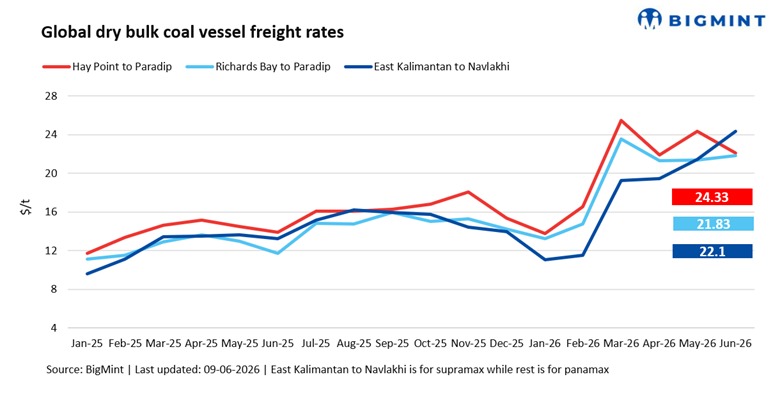

- Limited cargo visibility keeps Panamax market under pressure
- Tight vessel availability lends support to Supramax freights
Dry bulk coal freights to India showed mixed trends in the week ended 9 June, with Panamax routes facing pressure from subdued cargo activity and growing vessel availability, while the Supramax segment remained supported by tighter prompt tonnage. Market participants continued to monitor bunker price movements, vessel positioning, and cargo visibility across key loading regions.
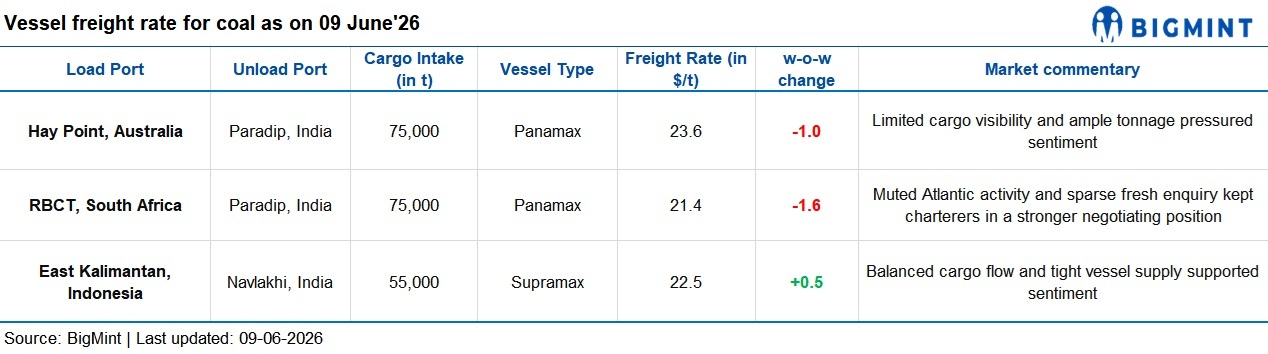
On the Australia-India Panamax route, sentiment softened amid limited cargo visibility and a growing Pacific tonnage list. While some fresh enquiries emerged, fixture activity remained thin, with ample vessel availability continuing to weigh on the market.
A shipbroker said, "Despite limited fixture activity, higher bunker prices over the past 10 days have helped support freight levels.."
Route-wise updates
A charterer told BigMint, "The Capesize market appears soft, while Panamax sentiment is also slightly weaker. In contrast, the Supramax and Handy segments remain relatively steady."
When asked whether fixtures were taking place, he said, "Although fixture volumes are not particularly high, we continue to see enquiries from various operators, including time-charter requirements."
The divergence between vessel segments was evident during the week, with Panamax freight levels reflecting weaker Pacific and Atlantic fundamentals, whereas the Supramax market continued to derive support from tighter vessel supply and balanced cargo flows.
Outlook
Freight sentiment is expected to remain mixed in the near term. Panamax markets may continue to face pressure if vessel availability remains elevated and fresh coal enquiries stay limited. In contrast, the Supramax segment could remain relatively supported, provided prompt vessel supply stays tight. Bunker price trends, monsoon-related disruptions in India, and cargo visibility across the Pacific and Atlantic basins will remain key factors influencing freight direction.