Deficient monsoon may challenge Indias kharif crop outlook; pulses, soybean and cotton face higher risk
...
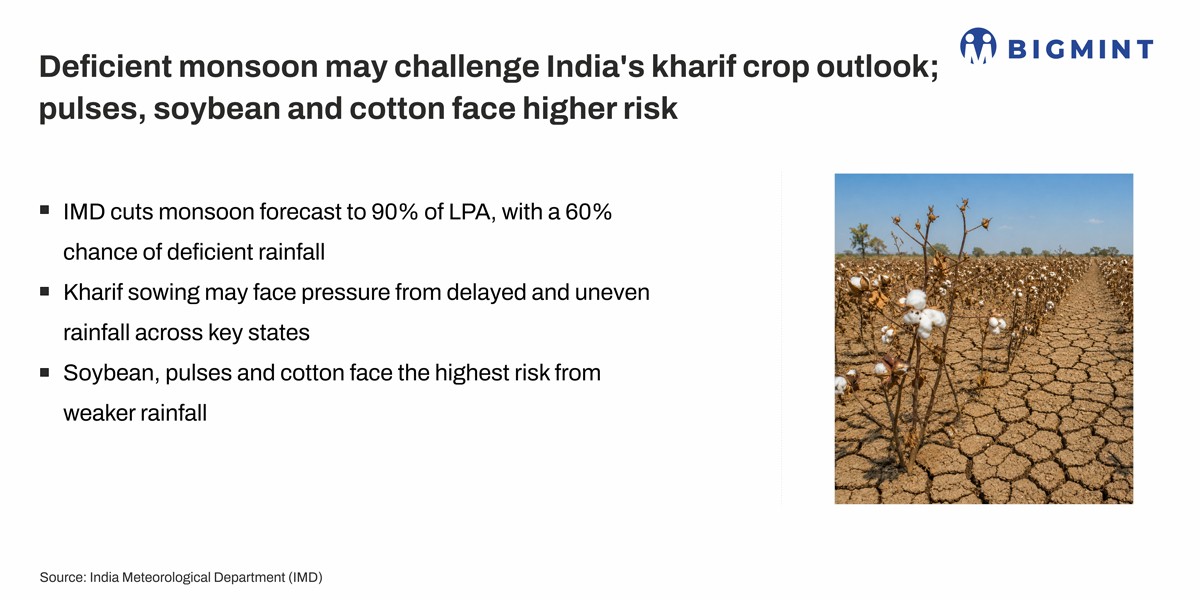

- IMD cut the monsoon forecast to 90% of LPA, with a 60% chance of deficient rainfall.
- Soybean, pulses and cotton face the highest risk from weaker rainfall.
Indias agricultural sector is facing renewed weather uncertainty after the India Meteorological Department (IMD) revised its southwest monsoon forecast to 90% of the Long Period Average (LPA) from an earlier estimate of 92%, while indicating a 60% probability of deficient rainfall during the June-September season. The revision has increased concerns over kharif crop production, water availability, farm incomes and food inflation, particularly as the monsoon remains the primary source of moisture for a large portion of Indias cultivated area.
The southwest monsoon contributes nearly 70% of Indias annual rainfall and continues to play a crucial role in supporting agriculture. Despite improvements in irrigation infrastructure, nearly half of Indias farmland remains dependent on rainfall, making crop performance highly sensitive to monsoon distribution and intensity.
Kharif sowing may face pressure
A weaker monsoon could affect the pace of kharif sowing, particularly across rain-fed regions of Maharashtra, Madhya Pradesh, Rajasthan, Telangana, Karnataka and Chhattisgarh. Delayed rainfall during June and July often leads to slower planting, lower germination rates and reduced acreage under major crops. The impact may be more pronounced if rainfall distribution becomes uneven. Even when seasonal rainfall remains close to forecast levels, prolonged dry spells during critical crop growth stages can significantly affect productivity.
Soybean, pulses and cotton among the most vulnerable
Among major kharif crops, soybean, pulses and cotton are expected to remain the most exposed to rainfall deficits due to their concentration in relatively low-irrigation regions. Maharashtra and Madhya Pradesh, which account for a significant share of soybean acreage, remain particularly vulnerable to moisture stress during sowing and pod development stages. Pulses such as tur, urad and moong could also witness yield losses if rainfall remains below normal during vegetative growth. Cotton-producing regions in Maharashtra, Gujarat and Telangana may initially withstand moderate rainfall deficits, but prolonged moisture stress during flowering and boll formation could impact productivity.
Rice production may be relatively better positioned
While rice remains Indias largest kharif crop, its exposure to monsoon risk varies significantly across regions. States with strong irrigation infrastructure such as Punjab, Haryana and parts of Andhra Pradesh may be relatively insulated from moderate rainfall deficits. However, eastern and central rice-growing regions remain heavily dependent on monsoon rainfall for nursery preparation, transplantation and reservoir replenishment. Any prolonged deficit during July and August could affect acreage and yield potential in these areas.
Water availability and reservoir levels in focus
A deficient monsoon not only impacts crop production but also affects reservoir storage and groundwater recharge. Lower rainfall can reduce irrigation availability during critical crop growth stages and increase dependence on groundwater extraction. The situation becomes particularly important for the upcoming rabi season, as reservoir levels accumulated during the monsoon largely determine irrigation availability for wheat, mustard and other winter crops. Reduced recharge could therefore have implications beyond the current kharif season.
Food inflation and commodity prices may strengthen
Weather-related production risks often translate into stronger agricultural commodity prices. Pulses, edible oils and cotton could witness the largest price impact if production prospects deteriorate. Rice markets may remain relatively stable initially due to comfortable government stocks, but any significant decline in production could eventually tighten domestic supply. Lower output of oilseeds and pulses may also increase import requirements and support prices across the edible oil and protein complex.
The government's decision to reduce kharif fertiliser demand estimates ahead of the season highlights growing concerns about lower sowing activity under a weaker rainfall outlook.
Outlook
The ultimate impact of the monsoon will depend not only on total rainfall but also on its regional distribution during the critical July-August period. While adequate irrigation and comfortable foodgrain inventories may cushion some crops, rain-fed commodities such as soybean, pulses and cotton remain highly vulnerable.
If rainfall deficits persist through the core monsoon months, India could witness lower kharif output, firmer agricultural commodity prices, increased food inflation risks and weaker rural incomes. Consequently, monsoon progress over the next eight to ten weeks will remain the most important factor shaping the outlook for Indias agricultural markets in 2026.
