Gulf war exposes sharp aluminium price gap between India and China
...
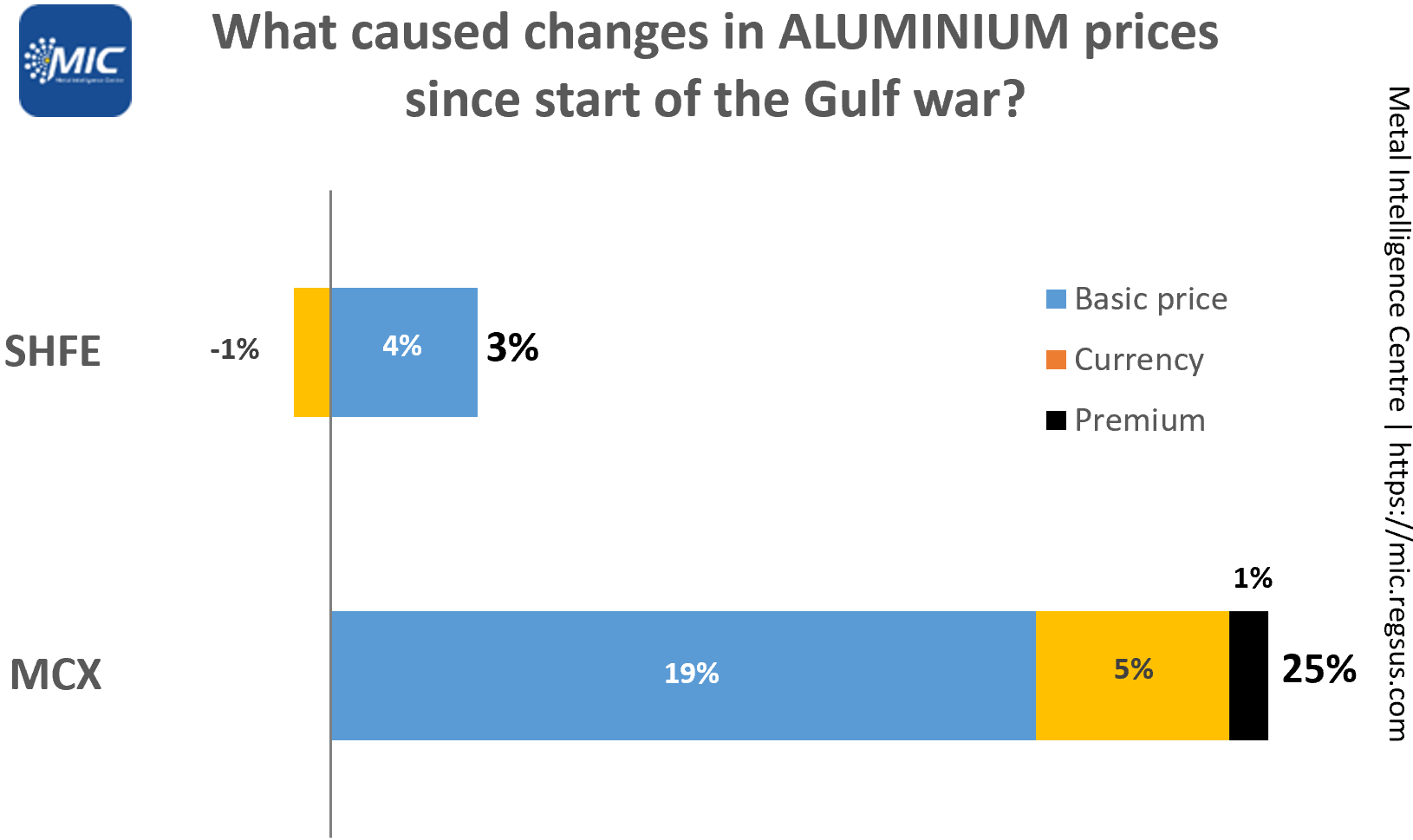

- Indian aluminium prices surge 25% post-war
- China's export duty cushions domestic consumers
Metal Intelligence Centre:The Gulf war, which erupted on 27 February 2026, introduced a significant geopolitical risk premium into global aluminium markets, driving prices higher across major exchanges. However, the magnitude of the increase varied considerably between India and China.
In India, domestic aluminium prices on the MCX surged by nearly 25%. The rise was primarily driven by a 19% increase in LME aluminium prices, a 1% uptick in physical premiums, and a 5% depreciation of the Indian rupee.
In contrast, aluminium prices on the SHFE remained relatively stable. Chinese domestic aluminium prices increased by only 3%, supported in part by a 1% appreciation of the yuan.
As a result, Indian aluminium consumers faced a substantially higher cost burden than their Chinese counterparts, with prices diverging by approximately 22%, or around $700/mt. The key reason behind this gap lies in the differing policy frameworks of the two countries. China imposes a 15% export duty on refined aluminium, effectively limiting exports and retaining more metal within the domestic market. India, meanwhile, does not have comparable export restrictions.
China's export controls, combined with subdued domestic demand, have pushed SHFE aluminium inventories to a six-year high. These inventories have acted as a cushion against global supply disruptions, helping stabilize local prices and strengthening the competitiveness of China's downstream aluminium industry. The country's export duty structure has also shielded domestic consumers from the sharp price volatility triggered by the Gulf conflict.
Although India is a major producer and net exporter of primary aluminium, around 22% of its primary metal output was exported in Q1 2026. Following the outbreak of the Gulf war, exports likely increased further as elevated international prices created attractive opportunities in key export markets across the Far East. In contrast, China exports very little primary aluminium, instead focusing on value-added aluminium products, whose exports rose by 7% in Q1 and 15% in April.
While aluminium prices increased globally in response to the conflict, domestic market structures and policy decisions resulted in markedly different outcomes. China's export restrictions helped contain local price inflation, whereas India's greater exposure to international markets translated into significantly higher costs for domestic consumers, creating a distinct set of winners and losers across the two economies.
Note: This article has been published as part of a content partnership between MIC and BigMint.
