Capesize pullback drags Baltic Dry Index lower despite Supramax resilience
...
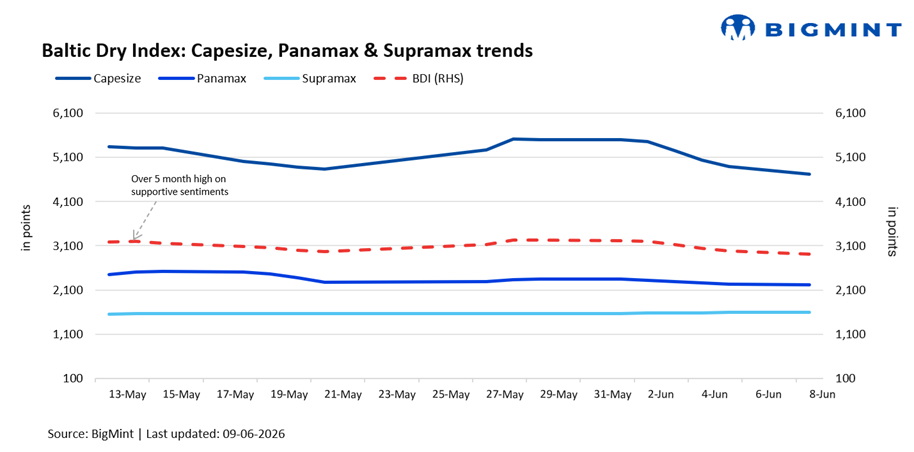

- Supramax remains firm on steady minor bulk demand
- Reduced long-haul fixing activity weighs on Capesize earnings
The Baltic Exchange's Dry Bulk Index (BDI) declined by 2.2% (65 points) to 2,916 points on 8 June 2026 against 5 June, driven mainly by a sharp correction in the Capesize segment as lower fixing activity and softer sentiment in iron ore trade weighed on earnings.
While overall freight levels remain healthy, the market appears to be entering a consolidation phase after recent gains. Although iron ore-related freight demand remained supportive, profit-taking and softer fixture activity on key long-haul routes weighed on rates. Panamax also eased amid balanced vessel availability and subdued grain and coal inquiries. In contrast, Supramax continued to show resilience, supported by steady minor bulk cargo demand and improved regional activity.
Segment-wise performance
- Capesize: The Capesize index fell by 3.6% (174 points) to 4,719 points. Rates fell significantly amid reduced cargo volumes and cautious chartering activity on major iron ore routes.
- Panamax: The Panamax index decreased by 0.8% (18 points) to 2,218 points. The segment remained relatively stable, though weaker coal and grain demand limited upside potential.
- Supramax: However, the Supramax index edged up by 0.5% (8 points) to 1,596 points. Rates continued to show resilience, supported by steady minor bulk cargo movements and balanced vessel supply.