Canada's ferrous scrap exports rise 27% despite lower steel output in Q1CY'26
...
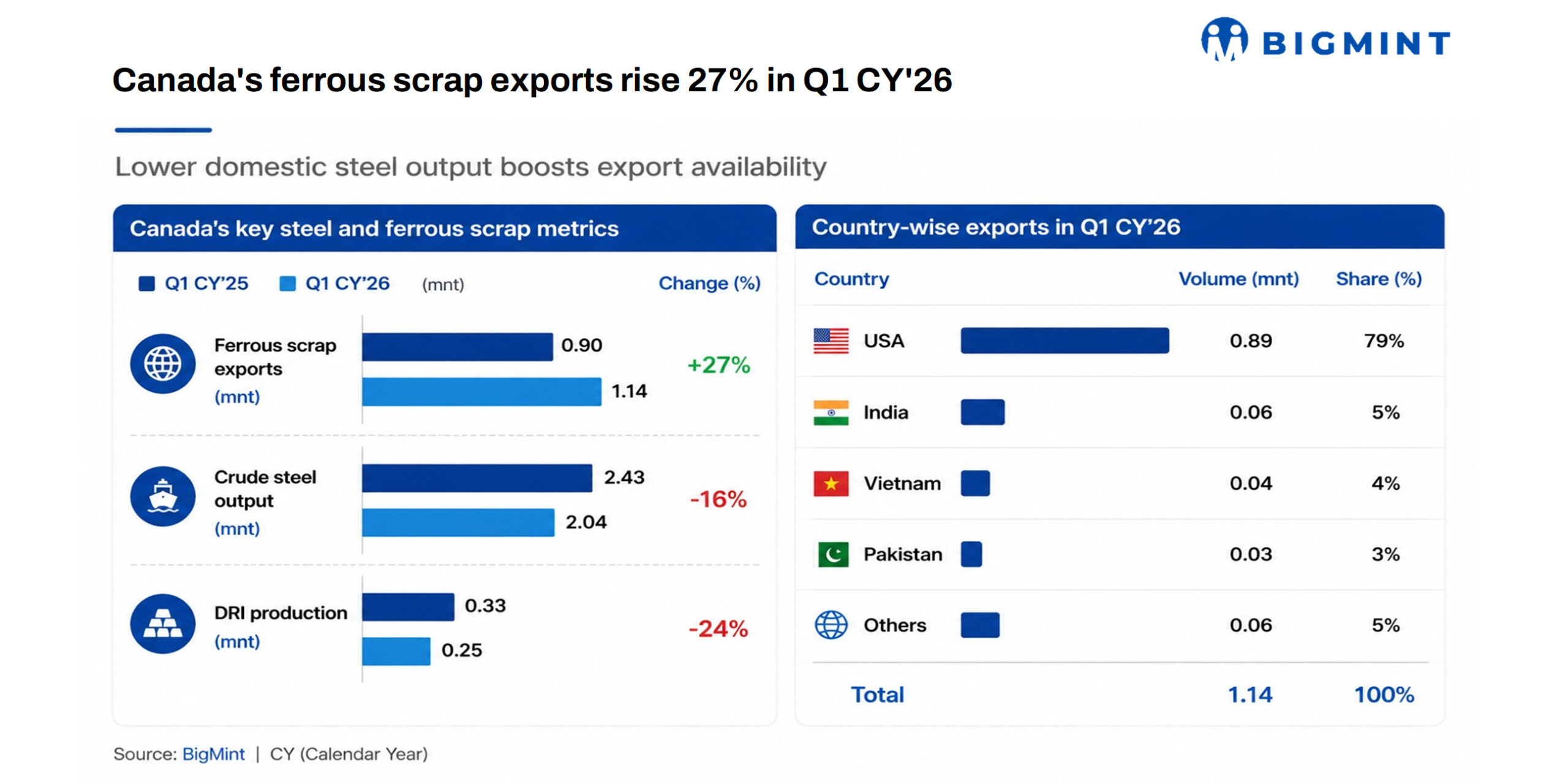

- Weak domestic metallics consumption supports higher scrap exports
- US continues to dominate as largest importer of Canadian ferrous scrap
Canada's ferrous scrap exports increased by 27% y-o-y to 1.14 mnt in Q1CY'26 from 0.90 mnt in the corresponding period last year. The increase was primarily driven by weaker domestic metallics consumption, which reduced local scrap absorption and increased export availability.
Domestic steel production slows
Canada's crude steel production declined by 16% y-o-y to 2.7 mnt in Q1CY'26 from 3.2 mnt a year earlier, reflecting softer steel demand and cautious mill operating rates. Meanwhile, DRI production fell to 0.31 mnt from 0.41 mnt during the same period, indicating lower metallics consumption by steelmakers.
Market participants noted that reduced domestic steelmaking activity increased scrap availability in the local market, encouraging suppliers to direct more material towards export channels. Additionally, higher US tariffs on Canadian steel products continued weighing on steel shipments and mill production, further limiting domestic scrap consumption.
US remains key export destination
The United States remained the largest importer of Canadian ferrous scrap, with imports rising to 0.89 mnt in Q1CY'26 from 0.74 mnt a year earlier. Strong regional trade connectivity and consistent procurement from US steelmakers continued supporting cross-border scrap flows.
India remained the second-largest destination, with imports increasing to 0.06 mnt from 0.05 mnt in Q1CY'25. Vietnam's imports doubled to 0.04 mnt, while shipments to Pakistan increased to 0.03 mnt. Meanwhile, exports to Taiwan declined to negligible levels, while shipments to other destinations rose to 0.06 mnt, indicating broader market diversification.
Outlook
Despite weaker domestic steel production, Canadian scrap exporters benefited from stronger overseas demand and increased export opportunities during Q1CY'26. Export volumes to Asian destinations also improved, highlighting continued international demand for Canadian ferrous scrap cargoes.