Australia: Coal exports hit 8-month high in May as Queensland port throughput strengthens
...
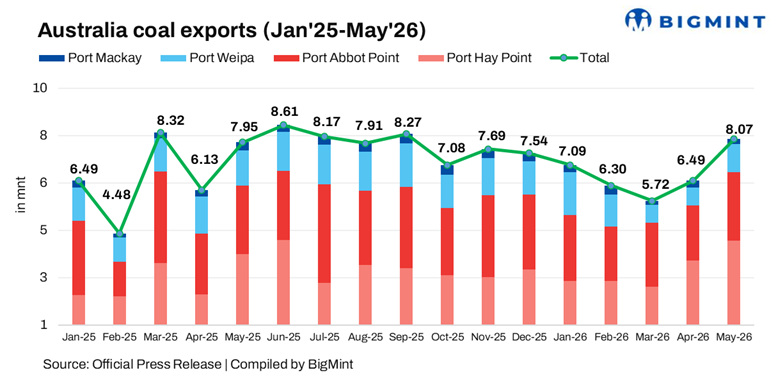

- Port Hay Point's shipments rise on strong coking coal loading activity
- Abbot Point's shipments rise 24% m-o-m on stronger cargo availability
Australian coal shipments through major export ports totalled 8.07 million tonnes (mnt) in May 2026, up 24.3% m-o-m from 6.49 mnt in April, reaching an 8-month high amid robust export activity and improved cargo flows across Queensland's key coal terminals.
Coal demand across Asia remained mixed in May. While weak steel margins continued to weigh on coking coal consumption in some markets, steady buying interest from South Korea, India, and Southeast Asia supported export activity. As a result, Australian coal shipments increased despite largely stable coal prices.
Port-wise export performance
- Port Hay Point recorded coal shipments of 4.22 mnt in May 2026, up 22.0% m-o-m from 3.45 mnt in April. The increase reflects strong coking coal loading activity and healthy vessel arrivals, providing positive support to Capesize freight demand.
- Port Abbot Point handled 2.61 mnt of coal in May, rising 23.7% m-o-m from 2.11 mnt in April. The growth indicates improved export throughput and stronger cargo availability, supporting regional dry bulk shipping activity.
- Port Weipa recorded coal shipments of 1.08 mnt in May, surging 58.8% m-o-m from 0.68 mnt in April. The surge was supported by increased export shipments following softer volumes in April.
- Port Mackay shipped 0.19 mnt of coal in May, declining 29.6% m-o-m from 0.27 mnt in April. The decrease indicates softer loading activity at the port, although its impact on overall export performance remained limited due to its relatively small share of total shipments.
Outlook
Australian coal exports are expected to remain firm in the near term, supported by ongoing procurement from key Asian importers and healthy loading schedules at major Queensland ports.
While strong cargo availability should continue supporting Capesize and Panamax freight markets, shipment momentum may be influenced by weather-related disruptions and changes in steel-sector demand across Asia.